
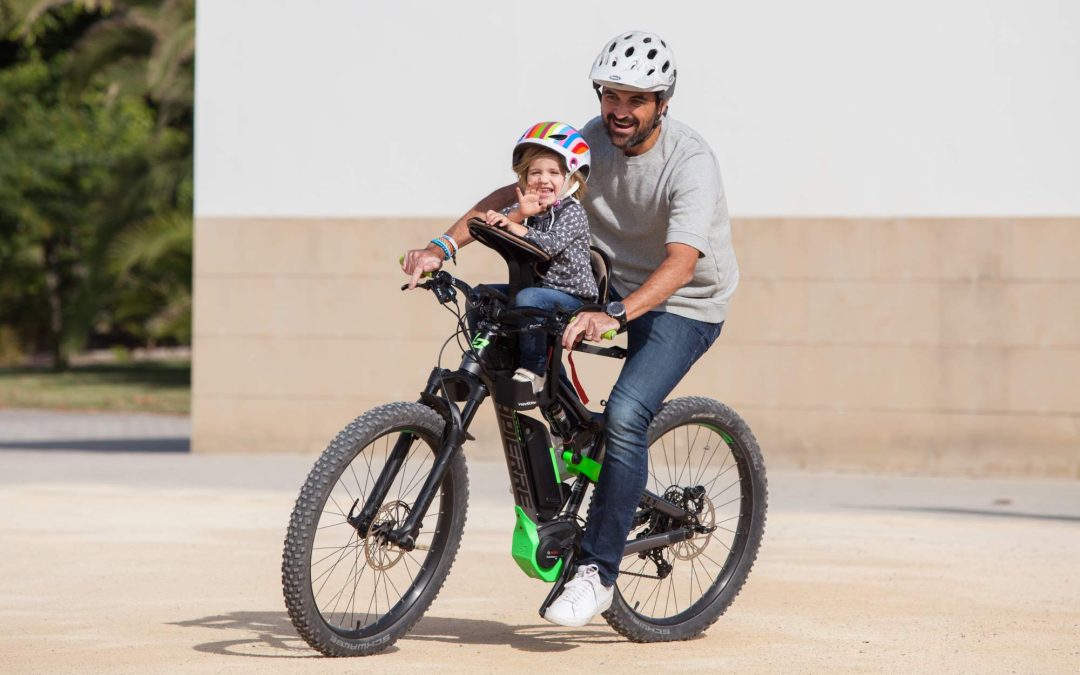
Yes, you can fit a child bike seat on most electric bikes. Whether you ride a hybrid e-bike, an electric mountain bike, or a step-through city model, there's likely a child bike seat option that works with your electric bike. The key is matching the seat type to your battery position and frame design.
In fact, e-bikes make family cycling easier, not harder. Pedal assist compensates for the extra weight of a child seat, turning hills into gentle inclines and headwinds into a non-issue. The question isn't whether you can do it — it's which setup suits your e-bike best.
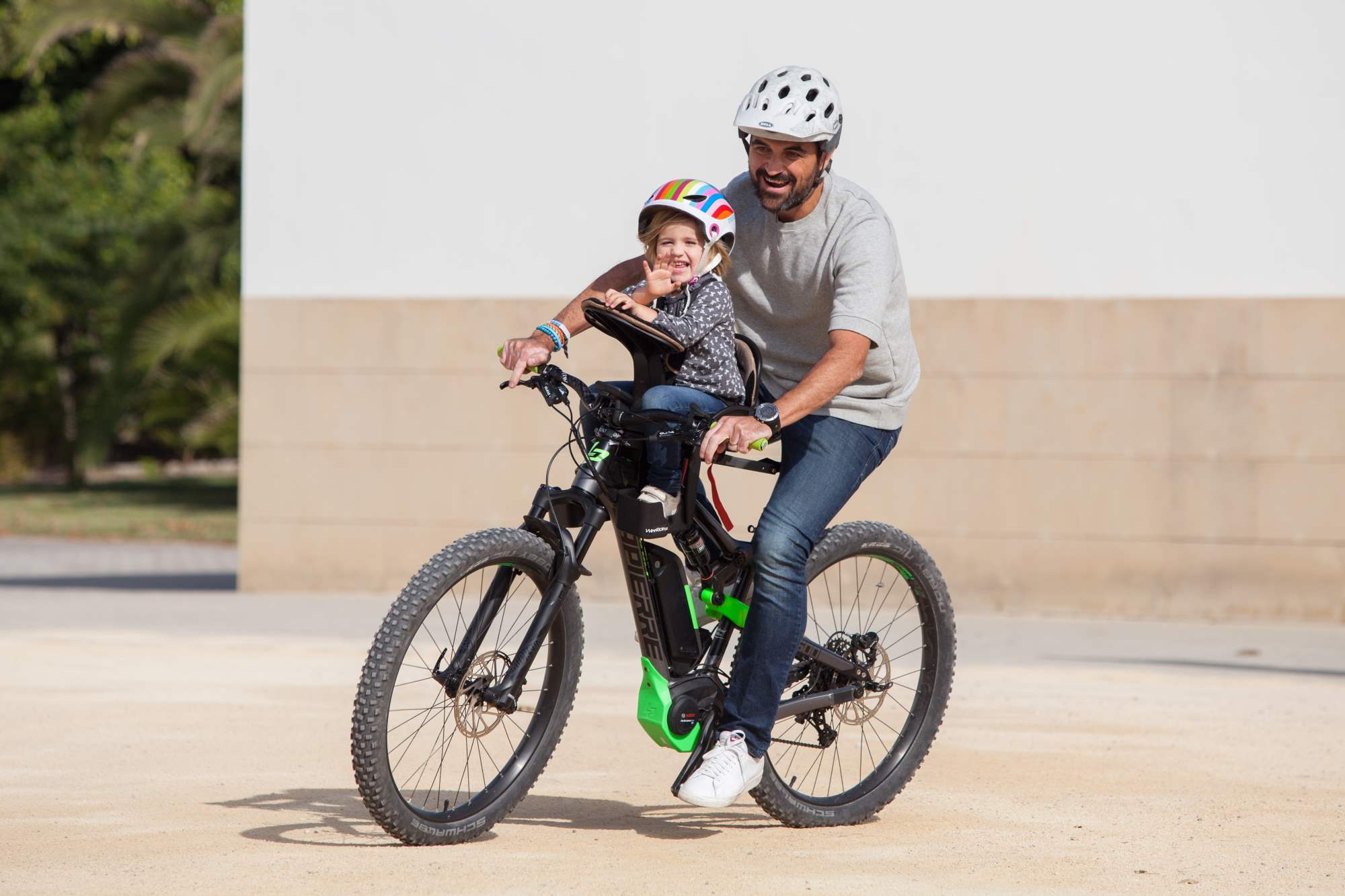
Below, we cover which seat types work with which e-bike designs, what to check before fitting, and why centre-mounted seats are often the simplest solution for electric bikes.
How Your Battery Position Affects Seat Compatibility
The biggest compatibility factor on an e-bike isn't the motor or the frame shape. It's where your battery sits. Battery placement determines which child seat mounting positions are available.
Downtube Battery (Most Common)
If your battery is integrated into the downtube (the tube running from the handlebars down to the pedals), you're in luck. This is the most common position on modern e-bikes, and it leaves both the handlebars and the rear rack free for child seats. All three seat types work: front-mounted, centre-mounted, and rear-mounted.
Seat Tube Battery
Some e-bikes mount the battery on or inside the seat tube. This works with front-mounted and centre-mounted seats without issue. Rear seats may fit too, but check that the battery housing doesn't interfere with the seat's frame clamp. Test the fit before committing.
Rear Rack Battery
If your battery sits on the rear rack, rear-mounted seats are usually blocked. The battery occupies the exact space where a rear seat would mount. Your options here are a front-mounted or centre-mounted seat. This is where a centre-mounted seat like our WeeRide Safe Front becomes the easiest solution. It mounts to a crossbar between the handlebars and saddle, completely bypassing the rear rack and battery.
Why Centre-Mount Seats Are Ideal for Electric Bikes
Centre-mounted seats solve the three most common e-bike compatibility headaches in one go.
No battery conflicts. The seat mounts to a crossbar that spans between your handlebars and saddle, away from the downtube, seat tube, and rear rack. It doesn't matter where your battery is — the mounting system avoids it entirely.
Works with step-through frames. Many popular e-bikes (especially city and commuter models) have step-through frames with no traditional top tube. Our WeeRide mounting bar creates its own crossbar, making it compatible with step-through designs that would block other front-mount options.
Better weight distribution. E-bikes are already heavier than regular bikes (typically 20-25kg vs 10-15kg). Adding a child seat and passenger amplifies any balance issues. A centre-mounted seat keeps the child's weight low and central on the frame, which is especially important on a heavier e-bike where high-mounted weight can affect handling at low speeds.
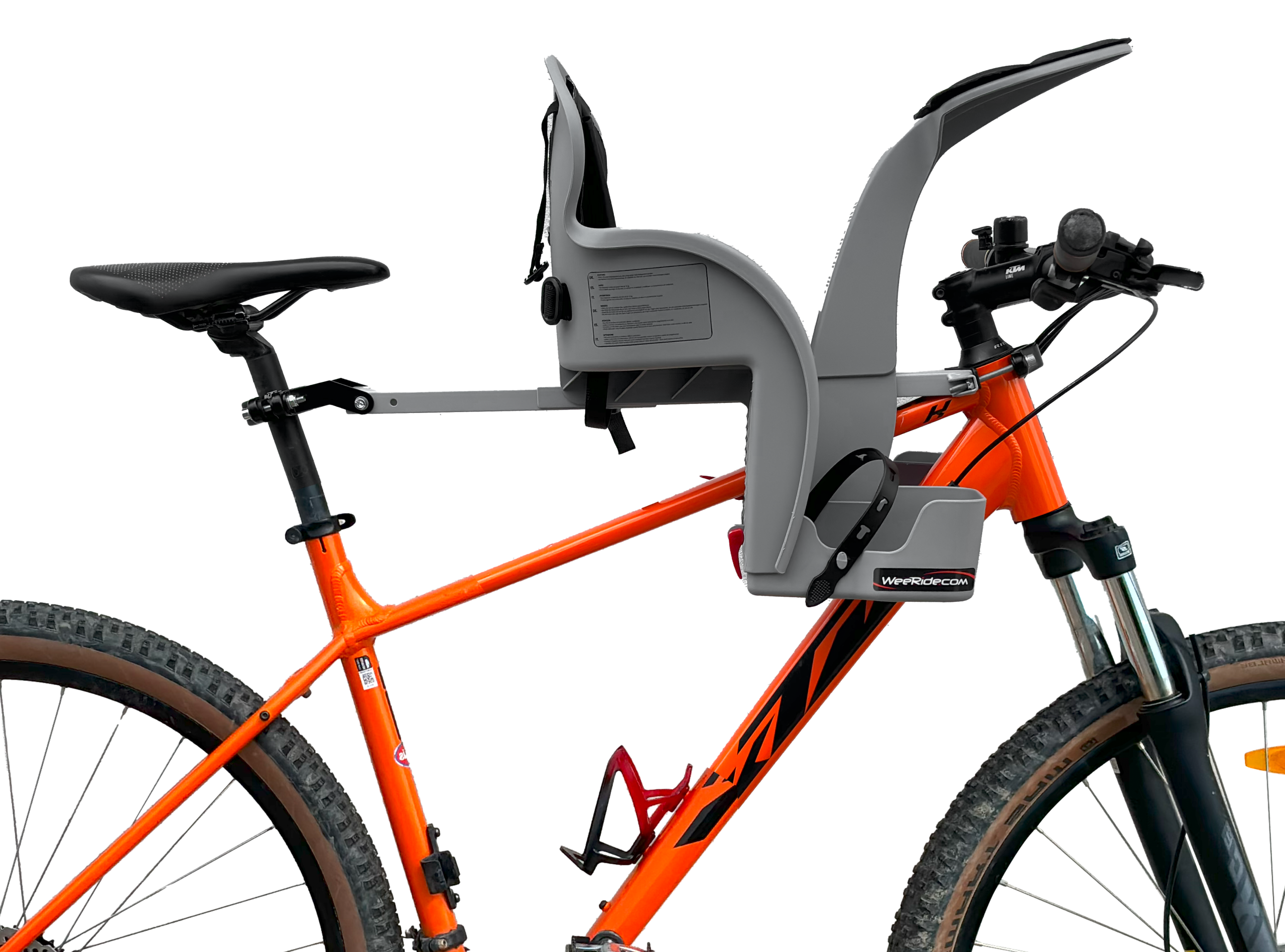
Our WeeRide Safe Front fits 99% of adult bikes, including electric bikes. It's usable from 6 months to around 4–5 years, is TÜV/GS tested to EN 14344, and your child sits right between your arms where you can see them, talk to them, and shelter them from the wind.
Pedal Assist Makes Family Cycling Easier
Here's something most guides overlook: an e-bike isn't a compromise for carrying a child. It's an advantage. A child seat and passenger add roughly 10-15kg to your bike. On a regular bike, that extra weight makes hills gruelling and longer rides exhausting. With pedal assist, it barely registers.
Most e-bikes offer multiple assist levels. For flat routes with a child on board, a low assist setting adds just enough support to keep your pace comfortable. For hills, switch to a higher level and the motor takes the strain. You'll still pedal, but the effort stays manageable even with a 12kg toddler on board.
Does carrying a child reduce your range? Yes, slightly. The extra weight means the motor works harder, so expect 10-20% less range than riding solo. On a typical e-bike with 60-80km range, that still leaves you with 50-65km — more than enough for family rides, nursery runs, and weekend adventures.
Safety Tips for E-Bikes With Child Seats
E-bikes with child seats are safe when set up properly. A few key points to keep in mind:
Start in a low assist mode. Pedal assist can accelerate faster than you expect, especially from a standstill. Begin rides in eco or low mode until you're comfortable with how the extra weight affects handling.
Check your brakes. The combined weight of bike, battery, you, child, and seat means more momentum to stop. Hydraulic disc brakes (standard on most e-bikes) handle this well, but check your pads regularly and replace them earlier than you would riding solo.
Respect the 15.5mph limit. UK e-bikes classified as EAPCs cut off pedal assist at 15.5mph (25km/h). This limit actually works in your favour with a child on board — there's no temptation to ride faster than is safe with a passenger.
Use a helmet. Both you and your child should wear properly fitted helmets on every ride. Our cycling helmets are designed for young children and fit from around 9 months.
Secure the seat correctly. Follow the manufacturer's fitting instructions exactly. On an e-bike, double-check that the seat doesn't interfere with cables, battery connections, or the display unit. Every seat that meets EN 14344 has been tested for secure mounting, but the fit still needs to be right for your specific bike.
Frequently Asked Questions
Is it legal to carry a child on an electric bike in the UK?
Yes. There is no UK law preventing you from carrying a child in a properly fitted bike seat on an EAPC-classified e-bike. The same rules apply as for regular bikes — use an appropriate child seat, ensure it's securely mounted, and use helmets.
What age can a child ride on an electric bike?
In a child seat, from around 6 months (in a centre-mounted seat like our WeeRide Safe Front) or 9 months (in most handlebar or rear seats), once they can sit upright independently. The child isn't operating the e-bike — they're a passenger in a certified bike seat.
Will a child seat damage my e-bike battery?
No, provided the seat is mounted correctly and doesn't press against the battery housing. Centre-mounted seats avoid the battery entirely. If fitting a rear seat, check for clearance between the seat frame and any battery or cable connections.
Does the extra weight affect the e-bike motor?
Modern e-bike motors (250W, as required for UK EAPCs) handle the extra 10-15kg of a child and seat comfortably. You may notice slightly more battery drain on hills, but the motor won't be strained. E-bikes are designed to assist with loads well beyond a child seat.
Start Riding Together
Fitting a child bike seat on an electric bike is straightforward once you know your battery position. Centre-mounted seats sidestep most compatibility issues, pedal assist makes the extra weight effortless, and the 15.5mph EAPC limit keeps speeds family-friendly. If you're already an e-bike rider, adding a child seat is one of the easiest ways to start cycling as a family.
Browse our full range of bike seats to find the right fit for your e-bike, or kontakt aufnehmen if you'd like help checking compatibility with your specific model.